
 Business License

Special Steel Striking Wrenches for Heavy-Duty Industrial Maintenance
Meta Description: Learn how to select and use special steel striking wrenches for heavy-duty maintenance. Compare wrench profiles, impact control, material data, and buyer checks.
Special Steel Striking Wrenches for Heavy-Duty Industrial Maintenance
Large fasteners are common in industrial plants, heavy machinery, pipelines, structural assemblies, and energy equipment. When a standard hand wrench cannot provide enough force, a striking wrench may be used with a controlled hammer blow to loosen or tighten a fastener.
A special steel striking wrench is designed for this type of demanding work. Its value comes from the combination of geometry, strength, fit, heat treatment, surface condition, and correct operating method. It should not be confused with a general-purpose spanner or with a non-sparking tool made from a copper alloy.
What is a striking wrench?
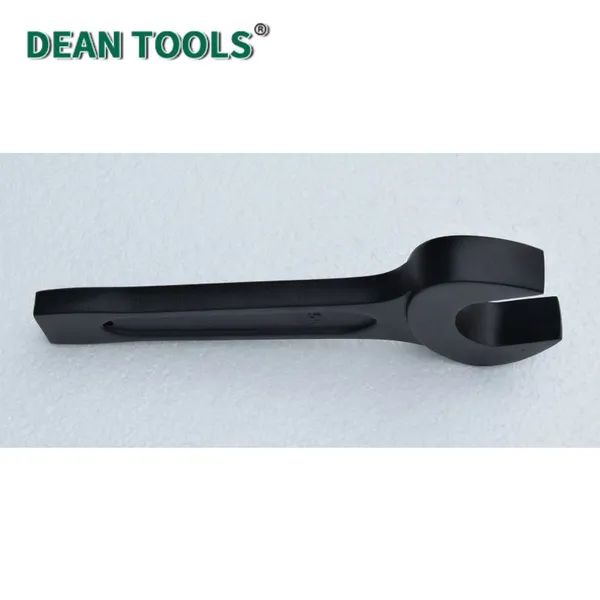
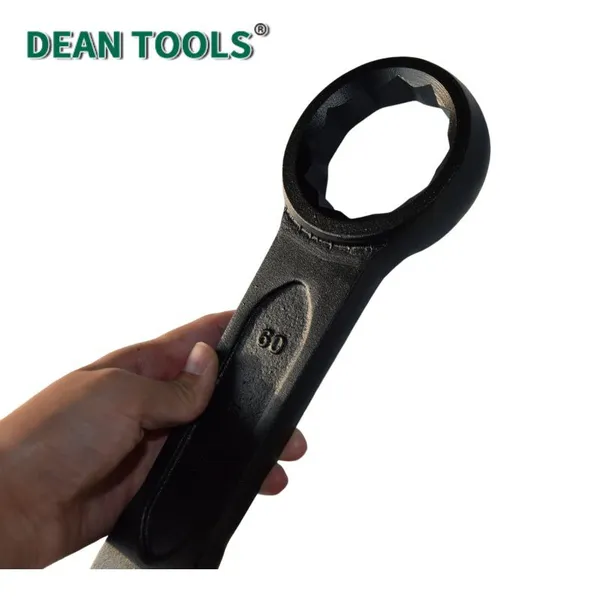
A striking wrench, also called a hammer wrench in some markets, usually has a reinforced striking end and a ring or box profile that fits over the fastener. The reinforced end is intended to receive a controlled impact from an approved striking hammer.
This design helps transmit force to a tight fastener while keeping the wrench aligned. It is often selected for applications where a long lever or powered tool is not practical, such as confined spaces or heavy equipment maintenance.
Why special steel is used
Special steel can be engineered to provide a suitable balance of strength, toughness, hardness, and wear resistance. The exact grade and heat-treatment process determine the performance of the finished wrench. For that reason, a catalogue statement such as “special steel” is not enough for a technical approval.
Buyers should request the manufacturer's material information and confirm whether the product is intended for the required load and service environment. If corrosion, temperature, or chemical exposure is a concern, these conditions should be included in the specification.
Important distinction: striking does not automatically mean non-sparking
A steel striking wrench is not automatically an Non-sparking or non-sparking tool. Steel tools can produce sparks under certain impact or friction conditions. If the job is in a hazardous area, the tool material and application must be reviewed against the site risk assessment and purchasing standard.
When non-sparking performance is required, ask specifically for a suitable non-sparking striking wrench and the relevant manufacturer documentation. Do not replace a specified non-sparking tool with a conventional steel striking wrench simply because the dimensions are the same.
How to choose the correct striking wrench
1. Confirm the fastener size and profile
Choose the exact size and profile required by the fastener. A loose fit can round the fastener, damage the wrench, and increase the chance of slipping. Check whether the fastener uses metric, imperial, or another dimensional system.
2. Consider access and clearance
Measure the available working space around the fastener. Check the overall wrench length, head thickness, ring depth, and clearance needed for the hammer. In confined areas, the correct size may not be the longest or heaviest option.
3. Review the striking area
The striking end should be large enough for controlled contact and shaped to reduce the chance of glancing blows. Inspect it for mushrooming, deep impact marks, cracks, or other damage before use.
4. Match the hammer to the wrench
Use a suitable striking hammer with a controlled swing. The hammer and wrench should be compatible with the work instruction. Avoid using another wrench, pipe, or improvised object as the hammer.
5. Confirm the load and operating limits
A striking wrench should be used only within its intended application. If a job requires unusually high force, stop and review the method. A larger hammer is not always the correct answer. The work may require heat, penetrating fluid, a hydraulic tool, or another engineered solution.
Safe operating procedure
Before striking, clean the fastener and ensure that the wrench is fully seated. Position the wrench so that it will remain aligned during impact. Keep hands away from the striking zone and make sure other personnel are outside the swing path.
Apply controlled blows rather than uncontrolled swinging. Stop if the wrench moves, the fastener deforms, or the striking face shows damage. After the job, inspect the tool and record any issue that could affect future use.
Follow the site's isolation and energy-control procedures. A striking wrench is a mechanical tool; it does not eliminate stored pressure, electrical energy, suspended loads, or process hazards.
CANGZHOU DEAN SAFETY &SPECIAL TYPE TOOLS PRODUCING CO. , LTD
Maintenance and inspection
Keep the wrench clean and dry. Check the ring profile, striking end, corners, and surface for cracks, excessive wear, deformation, or corrosion. Do not grind, weld, heat, or modify a striking wrench without written approval from the manufacturer or responsible engineering authority.
Store tools to prevent impact between metal parts and make size identification easy. A controlled tool cabinet or shadow board can reduce the chance of selecting the wrong wrench during a time-critical maintenance task.
Conclusion
A special steel striking wrench can provide reliable heavy-duty service when the size, profile, material, and working method are correctly matched. For hazardous-area work, the most important question is not whether a wrench is strong enough; it is whether the complete tool specification is appropriate for the worksite.
FAQ
Is a special steel striking wrench the same as a non-sparking wrench?
No. Special steel and non-sparking are different product descriptions. Confirm the material and application with the manufacturer.
Can I use any hammer with a striking wrench?
Use a hammer that is appropriate for the wrench and task. Follow the supplier's instructions and site procedure.
Why does the wrench need a ring profile?
A ring profile can provide more contact around the fastener than an open-end profile, helping maintain engagement during controlled impact.
Can a damaged striking end be repaired by grinding?
Do not modify the tool unless an approved repair procedure permits it. Remove it from service and consult the manufacturer or responsible technical authority.
Recently Posted
-
What Makes a Steel Tool “Specialty”?
September 20, 2026specialty steel tools, industrial steel hand tools, , custom steel tools, heavy-duty hand tools Specialty Steel Tools: How Ma Read More
 -
Non-Sparking Tools for Hazardous Work Areas: Materials, Applications, and Selection Tips
September 20, 2026-Meta Description: Learn how non-sparking tools support safer maintenance in potentially hazardous areas. Compare common materials Read More
 -
Why Use a Non-Sparking Octagonal Hammer in Hazardous Area Maintenance?
August 17, 2026Meta Description: Discover how a non-sparking octagonal hammer supports maintenance in hazardous areas. Learn about hammer sh Read More
 -
How to Choose the Right Non-sparking Tools for Hazardous Work Areas
August 17, 2026Meta Description: Learn how to select non-sparking and Non-sparking tools for hazardous work areas. Compare materials, a
Read More

Contact Us
Recommended Products
-
 Aluminum Bronze Non-Sparking Tool Set Manufacturer,Custom Safety Tools, Copper Alloy Non-Sparking Tools Kit | Safe Hand ToolsUS$ 500MOQ: 10 Sets
 -
Non Sparking Tools Brass Scoop , Spark Proof Tools,DEAN TOOLS 113PCS Beryllium Bronze Non-Sparking Tool TrolleyUS$ 89 - 159MOQ: 1 Set
-
Non Sparking Ball Pein Copper Hammer\Industrial Hardware Tools\Explosion Proof Tools\Premium Copper AlloyUS$ 25.68MOQ: 10 Units
-
13-Piece Non-Sparking Double Box Offset Wrench Set, for Mining & Chemical Industry, Anti-Corrosion Coating,Size:5.5*7-30*32 mmUS$ 123MOQ: 10 Sets
-
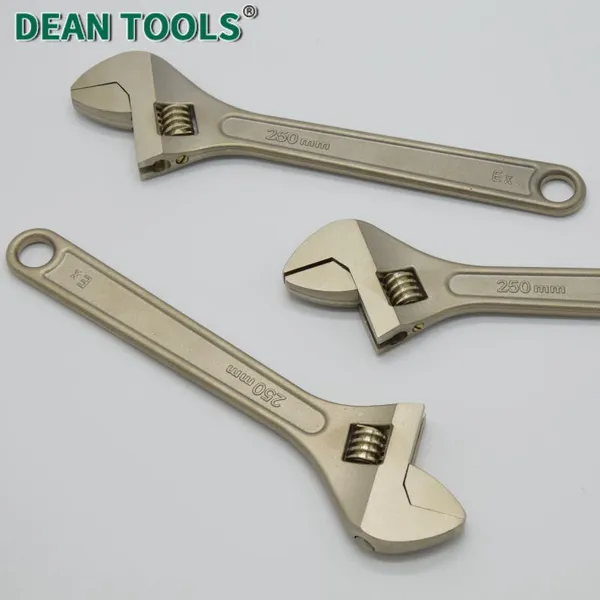
Non-Sparking Adjustable Wrench DEAN TOOLS Aluminum Bronze 6-Inch Natural Gas Pipeline Mining Operations SafetyUS$ 15MOQ: 10 Units
-
Non Sparking Beryllium Bronze Sledge Hammer With Fiber Handle 24P 18LBUS$ 39 - 520MOQ: 1 Piece
-
BERYLLIUM COPPER SCREWDRIVER SLOTTED FLAT NON SPARKING TOOLS 8*200MMUS$ 3.6 - 9MOQ: 1 Piece
-
Non Sparking Pipe Wrench Beryllium Bronze Stilson,tube Spanner American TypeUS$ 15 - 360MOQ: 10 Pieces
-
Sparkless be cu Joint Universal Wrench for Socket 1/2"*90mmUS$ 25 - 85MOQ: 1 Piece
-
Non-Sparking Lineman Pliers for Chemical Plant, Aluminum Bronze, Anti-Corrosion, 5-Year WarrantyUS$ 18MOQ: 10 Units
-
Non-Sparking Copper Hammer Mallet 2LB, Beryllium Copper Alloy,350mm LengthUS$ 25MOQ: 10 Units
-
Aluminum Bronze Non-Sparking Putty Knife 200 mm Length With Plastic Handle for Hazardous EnvironmentUS$ 7.5MOQ: 10 Units
-
Non-Sparking Explosion-Proof Torque WrenchUS$ 51MOQ: 10 Units
-
DEAN TOOLS Non-Sparking Ball Head Listening Rod, Copper Alloy Explosion Proof Listening Rod for Industrial Equipment MaintenanceUS$ 10MOQ: 10 Pieces
-
FLAT SPADE SHOVEL WOODEN HANDLE COPPER BERYLLIUM BRASS EDGE BLADEUS$ 20 - 25MOQ: 1 Piece
-
Non-sparking Flange Prop Beryllium Copper Alloy Anti-Corrosion Surface TreatmentUS$ 705.6MOQ: 10 Units
-
45# Steel 1" Dr Socket, 80mm Length,Size 22-36 Mm,45 Carbon Steel Socket ToolUS$ 5MOQ: 10 Units
-
Industrial 45# Steel Striking Open End Wrench, Industrial Maintenance Striking Wrench,Heavy Duty Hammering Open End WrenchUS$ 12MOQ: 10 Units
-
45# Steel Striking Box Wrench Size 17*150 Mm,Extra Wide Strike Zone Slogging Ring Spanner Corrosion Resistant Rust ResistantUS$ 7MOQ: 10 Units
-
45# Steel Hex Key Wrench, L-Shape,14mm, 90-Degree Bend, Satin Chrome Finish, 150mm Leg LengthUS$ 10MOQ: 10 Units